Visualisation in Mining Safety
Jincom spoke to Claire Turner of Synesis Consulting about her work with large companies in the global mining industry and the critical role of simplification and visualisation in safety communication.
Jincom spoke to Claire Turner of Synesis Consulting about her work with large companies within the global mining industry and the importance of simplification and visualisation in mining safety.
Claire is an organisational psychologist who works with companies to optimise human performance in safety critical industries including construction, transportation and mining. While advising on the implementation of a risk management strategy based on The International Council on Mining and Metals safety guidelines, Claire collaborates with HSE specialists Jincom to adapt health and safety tools into visual content in a variety of formats including print, digital and video.
Claire's role as a consultant is to ensure the end user perspective is always at the forefront when it comes to designing safety processes. “We're creating with human beings in mind, recognising the fallibilities and capabilities of human beings and making sure that we build that into the design of systems, processes, procedures and policies to engage people and help them to understand, retain and communicate that information accurately.”
Her initial suggestion to clients when looking at how to communicate safety critical information to the workforce is “to make it much more visually arresting, engage people through straightforward descriptions of what the task is and make absolutely crystal clear what the expectations are.” She recommends a “risk-based approach” that focuses on the elements that will add value. “We're not confusing them with a lot of extraneous information. We want them to get the basics done right. And if they do that, that would get us 85% to where we need to be in terms of risk management.”
Visual content works
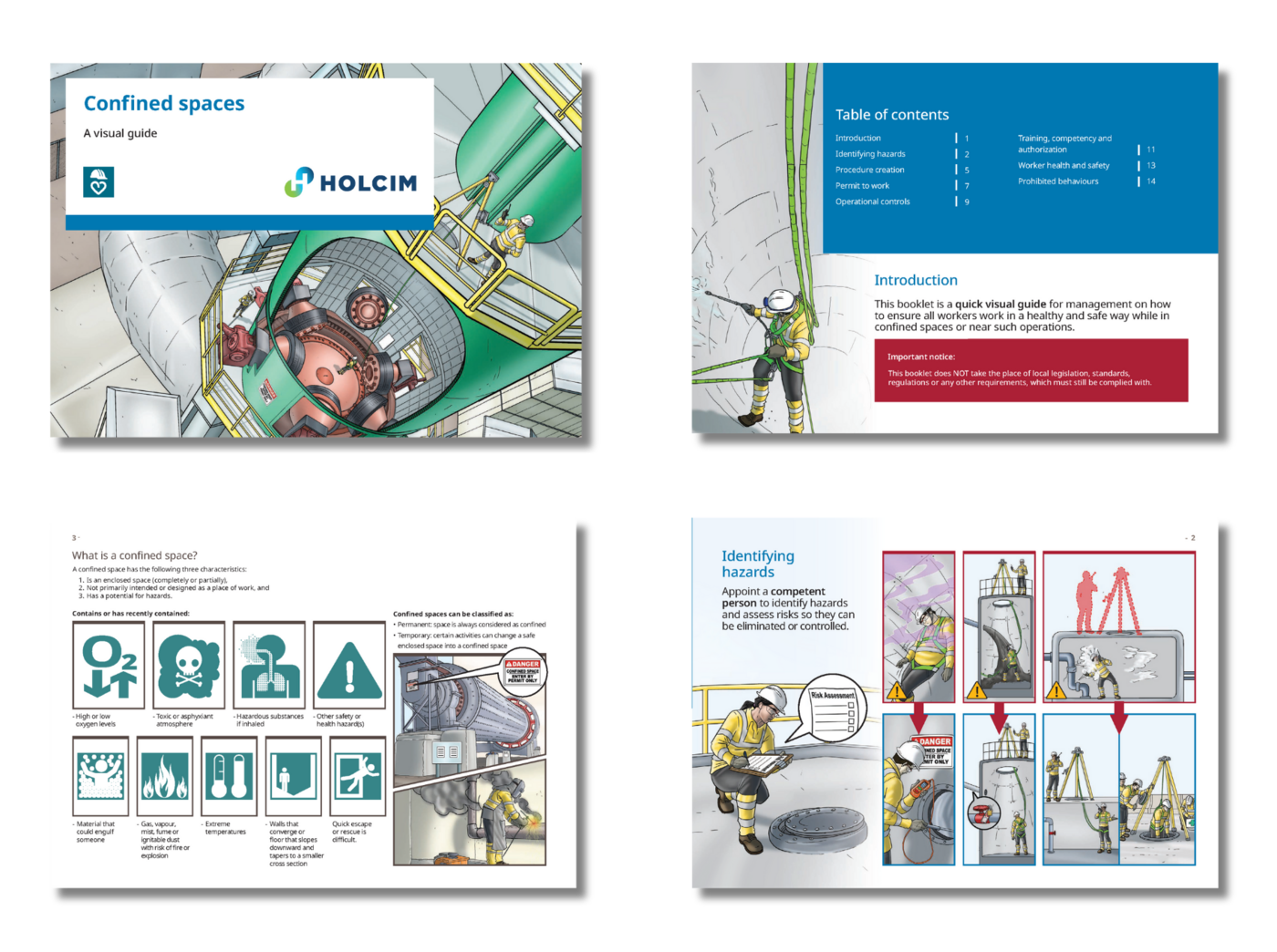
Converting highly technical text-based content into a visual format enables faster and more comprehensive understanding and engagement. Claire explains that visual presentation of safety information is a “no-brainer. We should be doing that for all safety critical information to really properly engage with a workforce who typically aren't likely to sit down and read a text document.”
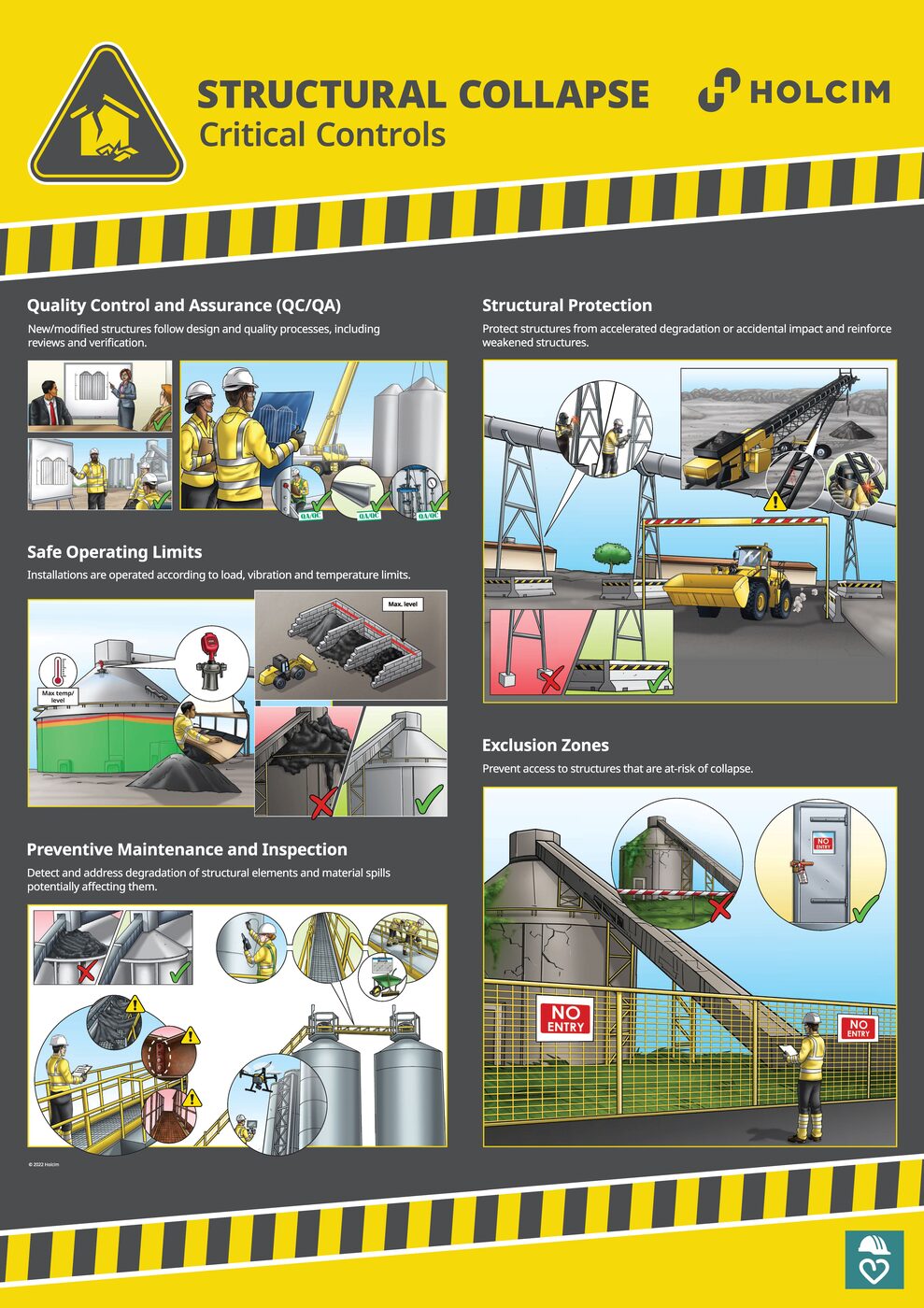
If you give them pictures and a step-by-step and a poster that summarises all the main points, then they're more likely to engage with it and retain the information. It's been communicated accurately and effectively and then adopted.
Focusing on the end user
While some aspects of safety management are technical, they are entirely reliant on people for success. Claire emphasises the importance of meeting the needs of the individuals who make up the workforce. “The diversity of the workforce has been a real point of focus in the development of the visual materials and how the workforce is represented in the pictures.” Giving the worker the tools to take responsibility for safety is key. “If we ignore their needs and how work is actually done in practice, we are in danger of just pointing a big finger and just telling them to do better without providing the systems and empowering them to be able to do that.”
Filling in the technology gaps
As companies grow their technology capacity, supervisors and managers are often provided with devices to allow them to conduct critical control verifications on site. These devices also enable them to access safety critical information and standards in the field, when they need it. While technological solutions work well where they are available, Claire says that for smaller teams in more remote locations, access to internet and devices can be more problematic — and in-person paper-based materials are required to accommodate end users' needs.
“The posters are a great add-on because they are a means of making sure that the right information is available at the time it's needed. For something like confined space entry, we've got the Standard, which is great. But if you've got people out in the field who don't have access to that Standard or wouldn't know where to look for it, if they've got a poster at the entry point for a confined space that summarises all the critical requirements, that's brilliant.”
The human performance perspective
Claire works with global health, safety and security functions and engages with regional leadership teams to make sure human performance considerations are taken into account in strategy. Safety is moving from being a technical, mechanistic discipline to being more humanistic — and even within an autonomous system the human operator must be considered. “So you're still reliant on humans, whether they're maintaining a critical control or whether they are the actual control through a procedure that they follow.”
There is a real desire to incorporate a human performance perspective and build it into how work is done so that safety is not seen as something that's done to people, but that people create safety.
Taking a holistic approach to safety, “graphical presentation of information is one dimension of a much bigger picture,” Claire said, adding that “visual content works beautifully because it's part of a complementary set of measures with the end user as the predominant focus for safety.”
Let us simplify and visualise your critical information.
See how Jincom can transform your safety communication for a workforce that actually understands it.